The Complete Small Business Accounting Guide for Australian SMEs
By Trinity Accounting Practice | Beverly Hills, Sydney NSW
Running a small business in Australia means wearing many hats — but your accounting shouldn't be one of them. From GST and BAS lodgements to payroll compliance and tax planning, the financial obligations facing Australian SMEs are real, complex, and constantly evolving.
This small business accounting guide covers everything you need to know — cloud accounting, bookkeeping, payroll, tax services, financial statements, and compliance — in plain language. Whether you're a sole trader just starting out or an established company looking to get your books in order, this guide is your practical starting point.
What Is Small Business Accounting — and Why Does It Matter?
Small business accounting is the systematic process of recording, organising, and reporting your business's financial transactions. It encompasses bookkeeping, payroll, tax lodgements, and financial reporting — all of which are required by the Australian Taxation Office (ATO) to keep your business legally compliant.
Without accurate accounting, small businesses risk:
- Missed BAS deadlines and ATO penalties
- Incorrect superannuation calculations
- Poor cash flow visibility
- Costly errors at tax time
- Difficulty securing finance or investment
Good accounting isn't just compliance — it's the foundation of a financially healthy business.
Not sure where your business currently sits? Our Accounting and Taxation Services cover the full picture for Sydney SMEs.
Cloud Accounting Tools for Australian Small Businesses
What Are the Best Cloud Accounting Tools for Small Businesses?
Cloud accounting allows small businesses to manage financial data online with real-time access, automation, and secure storage. For Australian SMEs, the most important consideration is that your platform integrates directly with the ATO's Single Touch Payroll (STP) system.
The leading cloud accounting tools for Australian SMEs include:
- Xero — The preferred platform for bookkeeping, bank reconciliation, payroll, BAS reporting, and real-time financial dashboards. Trinity Accounting Practice is a Certified Xero Advisor.
- Cloud Payroll Systems — Automated payroll platforms integrated with STP Phase 2 to ensure real-time ATO reporting.
- Document Management (Hubdoc / Dext) — Digitise invoices, receipts, and records automatically.
- Integrated Payment Platforms — Systems that sync invoicing with cash flow tracking.
Cloud accounting reduces manual data entry, improves accuracy, and makes BAS time significantly less stressful.
We use Xero to support SMEs across Sydney. Learn more about our Xero Bookkeeping Services.
How Does Cloud Accounting Improve Financial Control?
Cloud accounting centralises your financial data and automates the flow of information so you can make faster, better-informed decisions. Key benefits include:
- Real-time access — View your financial position anywhere, anytime
- Automated bank feeds — Reduce human error through automatic reconciliation
- GST tracking — Clear visibility of income, expenses, and GST liabilities
- Instant reporting — Profit & Loss, Balance Sheet, and cash flow reports on demand
- Audit trails — Secure data with complete history logs for ATO transparency
.jpg)
Bookkeeping for Small Businesses
How to Compare Bookkeeping Services in Australia
When comparing bookkeeping services, don't just look at price — look at compliance knowledge, software expertise, and their understanding of Australian tax law. A quality bookkeeping provider will handle far more than data entry.
Key factors to compare:
- ATO Compliance Knowledge — Deep experience with Australian GST, BAS, and PAYG rules
- Xero or Cloud Software Expertise — Not all bookkeepers are equally skilled with cloud platforms
- Accuracy — A proven track record of precise bank reconciliations and clean records
- BAS & GST Reporting — Timely and accurate lodgement with the ATO
- Payroll & Superannuation — Full understanding of super guarantee obligations and STP requirements
- Transparent Pricing — Fixed fees with a clearly defined scope of work
See our Bookkeeping Packages for fixed-price options tailored to Sydney SMEs.
What Is Double-Entry Bookkeeping and Why Does It Matter?
Double-entry bookkeeping is an accounting system where every transaction is recorded in at least two accounts — as a debit in one account and a credit in another. This is the global standard for business accounting.
It matters because it:
- Improves Accuracy — The books always balance, making errors easy to spot
- Supports Financial Reporting — Forms the essential basis for Balance Sheets and Profit & Loss statements
- Meets ATO Standards — Required for formal company, trust, and partnership accounting in Australia
- Provides an Audit Trail — Every transaction can be traced back to its source
Not sure if your books are set up correctly? Read our guide: Bookkeeping vs Accounting — What's the Difference?
What Is the Difference Between Cash and Accrual Accounting?
The difference lies in when transactions are recorded — and choosing the wrong method can distort your financial picture.
Cash Accounting records income and expenses only when money physically changes hands. It's simpler and often favoured by smaller businesses or sole traders with straightforward transactions.
Accrual Accounting records income and expenses when they are earned or incurred, regardless of when payment is made. This method:
- Provides a more accurate picture of your long-term financial position
- Is the standard for companies, trusts, and larger businesses
- Supports more sophisticated financial planning and ATO reporting
Trinity Accounting Practice advises clients on the most appropriate method based on their business structure and ATO obligations. Contact us to discuss which method suits your business.
Payroll, Superannuation, and Tax Compliance
How to Outsource Payroll and Tax Compliance Effectively
Outsourcing payroll and tax compliance reduces your administrative burden and significantly reduces the risk of costly ATO penalties. Effective outsourcing includes:
- STP Reporting — All payroll events reported to the ATO in real-time via Single Touch Payroll Phase 2
- Accurate Calculations — Wages, PAYG withholding, and superannuation guarantee (SG) calculations done correctly every time
- Timely Lodgements — BAS, PAYG, and tax returns filed on schedule with the ATO
- Year-End Finalisation — STP finalisation completed before the ATO deadline
Learn more: Understanding Single Touch Payroll — A Guide for Employers
What Defines Quality Small Business Tax Services?
High-quality tax services go beyond form-filling. Look for a provider that offers:
- Accuracy — Precise preparation of tax returns for individuals, companies, trusts, and partnerships
- Compliance-First Approach — Advice strictly aligned with current Australian tax law
- Proactive Risk Management — Identifying tax risks before they become ATO issues
- Transparent Fees — Clear communication on costs and obligations upfront
- Audit Support — Guidance and representation during ATO audits or reviews
What Should You Look for in Small Business Tax Planning?
Tax planning is the legal, proactive arrangement of your financial affairs to minimise tax liability — and it's very different from tax avoidance. Look for services that offer:
- Forward-Looking Strategies — Planning for the year ahead, not just reviewing the past
- Entity Structure Review — Assessing whether your current structure (sole trader, company, trust) is still tax-efficient. Read: Why Does Business Structure Matter?
- Cash Flow Assessment — Understanding how tax payments affect your working capital. Read: Cash Flow vs Profit
- Practical Recommendations — Advice that aligns with your specific business goals, not generic templates
Don't miss deductions you're entitled to: Top 5 Tax Deductions Small Businesses Often Miss
Financial Statements and Business Advisory
How to Read a Small Business Financial Statement
Your financial statements tell the story of your business. Every small business owner should understand the three core reports:
1. Profit and Loss (P&L) StatementShows whether your business is making or losing money over a period. Key figures to monitor: Net Profit, Gross Margin, and operating expenses as a percentage of revenue.
2. Balance SheetA point-in-time snapshot of your business's financial position — what you own (Assets) versus what you owe (Liabilities). The difference is your equity.
3. Cash Flow StatementTracks how much actual cash is flowing in and out of your business. A business can be profitable on paper but fail due to poor cash flow. This is critical to monitor regularly.
Deep dive: Why Cash Flow Problems Destroy Businesses Faster Than Low Sales
How to Choose a Business Advisory Service for Your SME
A great business advisor acts as a strategic partner — not just a compliance provider. When choosing an advisory service, consider:
- Industry Experience — Do they understand your sector's specific challenges?
- Structural Knowledge — Are they across companies, trusts, partnerships, and SMSFs?
- Forecasting Capability — Can they help with budgeting, cash flow projections, and growth planning?
- Strategic vs Compliance Separation — Good advisors draw a clear line between strategic financial advice and routine compliance tasks
Our Business Advisory Services help Sydney SMEs plan, grow, and stay financially resilient.
Accounting Compliance — What Every Australian SME Must Know
Accounting compliance means meeting all of your legal and regulatory financial obligations. For Australian SMEs, this includes:
- Accurate record-keeping — The ATO requires businesses to keep records for at least 5 years
- BAS lodgements — Quarterly or monthly Business Activity Statement (BAS) lodgement with the ATO
- PAYG Withholding — Withholding tax from employee wages and remitting to the ATO
- Superannuation Guarantee — Paying the correct SG rate on time to avoid the Super Guarantee Charge (SGC)
- Annual Tax Returns — Lodging company, trust, partnership, or individual returns by the ATO deadline
Non-compliance exposes your business to penalties, interest charges, and the stress of an ATO audit. Maintaining proper compliance is the foundation of a "bankable" business — one that can access finance, attract investors, and scale sustainably.
Common pitfalls to avoid: Common Tax Mistakes Small Business Owners Should Avoid
How Trinity Accounting Practice Supports Sydney Small Businesses
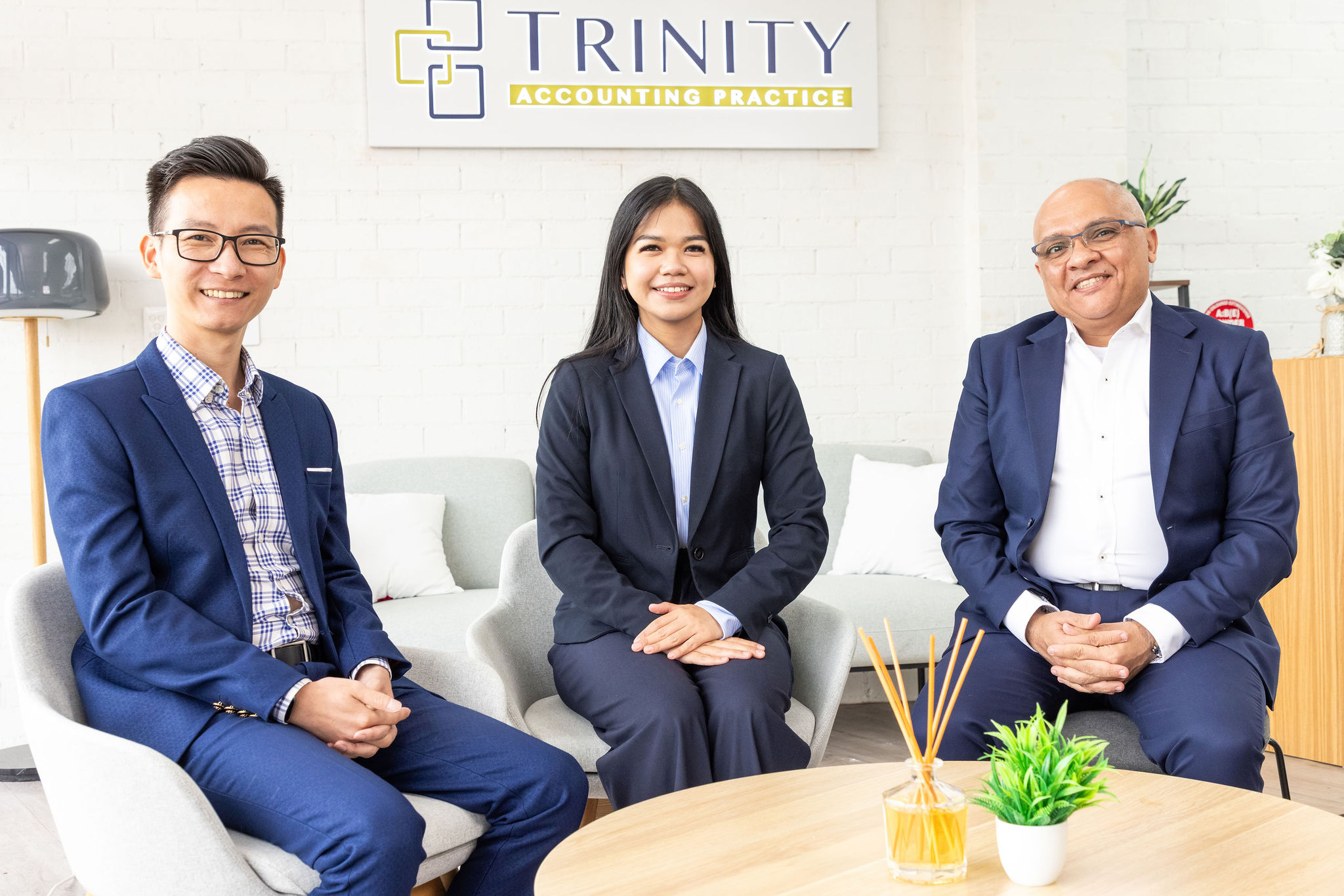
Based in Beverly Hills, NSW, Trinity Accounting Practice has been proudly supporting the Sydney business community since 2003. We provide end-to-end accounting, bookkeeping, and advisory support for SMEs across South West Sydney, the Inner West, and Greater Sydney.
Our services include:
- Accounting and Taxation — Tax returns for individuals, companies, trusts, and partnerships
- Xero Bookkeeping — Certified Xero Advisor support for cloud accounting and BAS
- Bookkeeping Packages — Fixed-price monthly bookkeeping for SMEs
- Business Advisory — Strategic financial support to help your business grow
- Virtual CFO Services — CFO-level financial management without the full-time cost
- SMSF Accounting — Self-Managed Super Fund compliance and reporting
We work with SMEs across a wide range of industries. Explore the niches we specialise in.
Speak With a Small Business Accountant in Sydney
Whether you're a sole trader just starting out, a company director managing growth, or an established SME looking to sharpen your financial reporting — Trinity Accounting Practice is here to help.
Trinity Accounting Practice
📍 159 Stoney Creek Road, Beverly Hills NSW 2209
📞 02 9543 6804
📅 Book an Appointment with Ramy Hanna
Also From Trinity Group
🔹 Virtual CFO Services — Strategic financial management, budgeting, forecasting, and compliance for growing businesses and not-for-profits: vcfoaus.au
🔹 Nexus Wealth Partners — Home loans, refinancing, and business finance: nexuswealth.au